What counts as a diving environment?
When we talk about freediving environments, we’re naming the physical and logistical setting where you practice breath-hold diving. Each environment brings a specific mix of depth, visibility, access to the surface, currents, and hazards. Common categories you’ll hear about include:
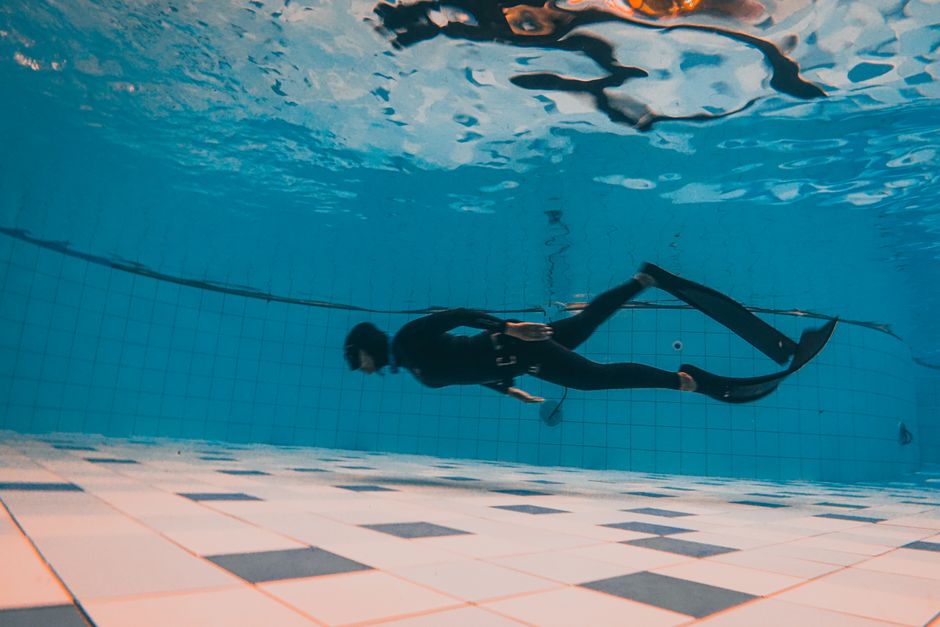
- Pool / confined water: a controlled, shallow area ideal for breath-up, static and dynamic training.
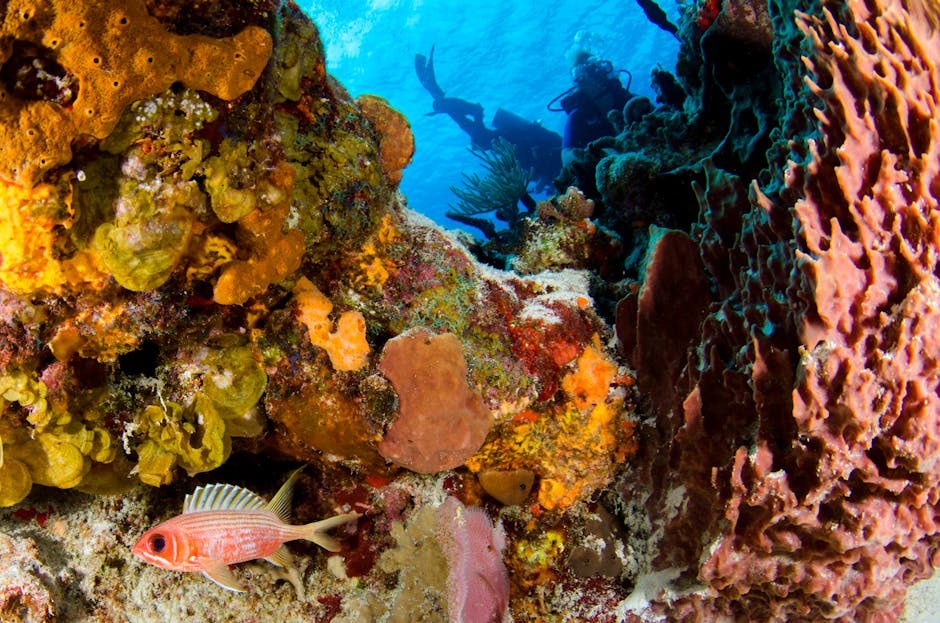
- Coastal / boat-access open water: reefs, rocky shorelines and sandy drop-offs within easy reach of shore or a tender boat.
- Blue-water / pelagic: deep, open ocean with few visual references and direct access to profound depth.
- Drift / current sites: reef edges or channels where water movement carries divers along.
- Overhead environments: caverns, caves and wrecks where a direct ascent to the surface is not possible.
- Night and altitude sites: environments that change the sensory picture and physiological responses — diving at altitude or in darkness requires additional planning.
Why does the environment matter? Because temperature, depth, access to the surface, currents and overhead risk directly change what equipment you need, how you move and how you manage safety. A warm, calm bay is an excellent place to refine technique; a blue-water drop with strong visual disorientation is excellent for experienced teams with dedicated surface support. Match the environment to the learning objective and to the comfort and skill level of the team.
Pools and confined-water sites: the training workhorse
Pools and sheltered, confined-water sites are the most useful places to hone fundamentals. They offer predictable conditions and make it easier to focus on breathing, relaxation and movement without the added variables of open water. Best uses include:
- Static apnea practice (face-down breath-holds at the surface)
- Dynamic apnea and finning mechanics along a lane
- Technique drills: streamline, turns, efficient kicks, and practising equalization timing in shallow controlled descents
From a safety perspective, pools are forgiving: supervision is close, rescue is straightforward and environmental unpredictability is low. That makes them ideal for building confidence and for early-stage training.
Limitations: a pool won’t expose you to true depth-related physiology or the sensory differences of open water. Pressure effects that matter for equalization, wetsuit compression, and breath-hold pacing only show up when you go deeper. Always progress from pool sessions to shallow open-water practice before attempting depth-focused training.
Coastal and boat-access open water
Coastal sites are the bread-and-butter of freediving. They can include coral reefs, rocky shorelines, sand canyons and sudden drop-offs. Visibility, currents and conditions vary with tides, swell and recent weather.
Entry and exit considerations matter more here than in a pool. Shore entries require local knowledge of swell, surf zones and submerged rocks; boat drops require a clear plan for surface checks, a reliable pickup strategy and a visible surface marker buoy.
Practical site-choice rule: select a location that is a few metres deeper than your planned maximum to give you buffer, and pick protected conditions for focused training. If you plan to work on constant-weight dives to 20 metres, look for a site where the bottom or the safe anchor depth is perhaps 25–30 metres and where you can establish a stable dive line and surface float.
Drift and current diving: reading the water
Currents change how a freedive feels and how you plan it. Even a light current alters your descent and ascent effort, modifies equalization timing and complicates buddy positioning and surface supervision.
Tactics that help:
- Plan the drift direction with surface support so pickups are predictable.
- Use reef features or a temporary reference line off the buoy to keep orientation during descent and ascent.
- Stay close to surface support; agree hand-off points and a clear “grab-and-hold” plan with the boat operator.
- Communicate a conservative depth and time plan when currents are present.
When to avoid drift sites: strong, variable or reversing currents are poor choices for early depth training, or anytime a diver is still inconsistent at equalizing. If you can’t comfortably equalize while adjusting body position to a current, delay the session until conditions calm.
Blue-water and pelagic freediving
Blue-water environments provide fast access to deep water without a bottom in sight. That makes them appealing for big-depth attempts and for encounters with open-ocean life. However, minimal visual references can be disorienting: your brain expects horizon and reef cues, and their absence can increase anxiety or spatial confusion.
Risk mitigation in pelagic settings is straightforward but non-negotiable:
- Use a robust surface float or buoy with a highly visible flag; lines and tethering are essential for depth control.
- Have a committed surface support team that maintains visual contact and has a recovery plan.
- Use clear, rehearsed signals and a redundant pickup plan—boats can lose sight of a diver in seconds.
Blue-water is not a beginner environment. Build experience in coastal sites and with progressively deeper, protected dives before attempting pelagic freediving. When in doubt, add another experienced person to the team and brief everyone thoroughly.
Overhead environments: caves, caverns and wrecks
Overhead spaces introduce a fundamental change: you cannot ascend directly to the surface. This removes your ultimate safety margin and replaces it with structured, discipline-specific risks:
- Navigation errors and silt-outs that reduce visibility to zero
- Entrapment hazards and complex exits
- Increased psychological stress when under a roof or inside a hull
Skills required are specific and non-trivial: guideline use, conservative gas and breath-hold management, precise buoyancy control, and practice in overhead rescue techniques. Guiding lines must be used, and every entry should have a conservative turnaround point and redundant exit checks.
Rule of thumb: never enter overhead spaces without training specific to that environment and a surface team briefed on emergency extraction procedures.
Environmental factors that change every dive
Several variables will alter how a single dive feels compared to the last one:
- Visibility: poor visibility reduces visual reference points and may increase anxiety. Slow your pace and stay close to your buddy or the line when sight is restricted.
- Thermoclines: temperature layers can feel like passing through a wall; they change buoyancy perception and can mask or exacerbate equalization sensations.
- Swell and surface chop: increase surface effort and make entries and exits harder; keep surface intervals and breath-ups conservative on choppy days.
- Tides and wind: they can reverse currents and change the safety of shore entries—consult tide tables and recent local reports before you go.
- Water temperature and sun exposure: pick wetsuit thickness and accessories to preserve performance. Cold early in a session increases oxygen consumption; plan for longer surface recovery and warmer exposure between dives.
Adjust expectations and pacing when any of these factors change. A dive that feels easy in calm, warm water might be significantly harder in colder, turbulent conditions.
Choosing equipment and exposure for the site
Gear choices should help you move efficiently and stay safe in the chosen environment.
Wetsuit and exposure: match neoprene thickness and cut to the water temperature and your mobility requirements. Two-piece freediving suits often offer greater flexibility and thermal efficiency; single-piece suits and rash guards suit warm-water or pool work. Consider hoods, gloves and socks for cold water, but beware that thicker gloves and socks will change fin fit and sensitivity.
Weighting and buoyancy: do a surface buoyancy check for the discipline and location. For constant-weight depth training you generally want to be slightly positive at the surface with near-neutral buoyancy a few meters down; for dynamic pool work you aim for a horizontal neutral glide with minimal kicking effort. Redistribute weight if your legs or head ride too high or too low.
Mask, fins and accessories: choose a mask that seals reliably, allows easy nasal access for equalization and has a low internal volume. Fins should suit the discipline—shorter, stiffer blades for dynamic pool sprints; long, flexible freediving fins for constant-weight depth work; and monofins only when you’ve trained specifically for them. Always carry a secure surface marker or float and a reliable lanyard/dive line setup for depth sessions.
Site selection, buddy planning and emergency prep
Good diving is mostly good planning. Use a concise pre-dive checklist before every session:
- Objective and maximum planned depth or time
- Entry and exit plan, including alternative routes
- Surface support position and pickup plan
- Communication signals and hand-off points
- Rescue plan and equipment check (float, knife, whistle, radio)
Buddy roles should be explicit. Agree who is supervising and who is performing, how and when swaps occur, and what the supervising buddy does if a diver is late to the surface or appears distressed. Practise simple surface recoveries and recovery-breathing sequences on dry land and in shallow water so reactions are automatic when needed.
Local learning accelerates safety. Work with experienced local instructors and guided sessions to learn site quirks—current changes, unseen rocks, and the best sheltered entry points. For example, manifreediver.ir runs site-specific training that focuses on local conditions and safe progression paths.
As a final safety note: follow recognized safety guidance and resources—Divers Alert Network (DAN) is a reliable source for general dive-safety information. If you experience persistent ear, sinus or ear-pain, hearing loss, dizziness, blackouts, or other worrying symptoms, stop diving and see a doctor experienced in dive medicine. Prompt professional evaluation is important for barotrauma and other pressure-related injuries.
Choosing and adapting to the right freediving environment is a matter of honest self-assessment, careful planning and progressive learning. Treat each site with respect, match the environment to your objective, build your skills in predictable water first, and always keep surface support and simple, rehearsed emergency plans at the center of what you do.