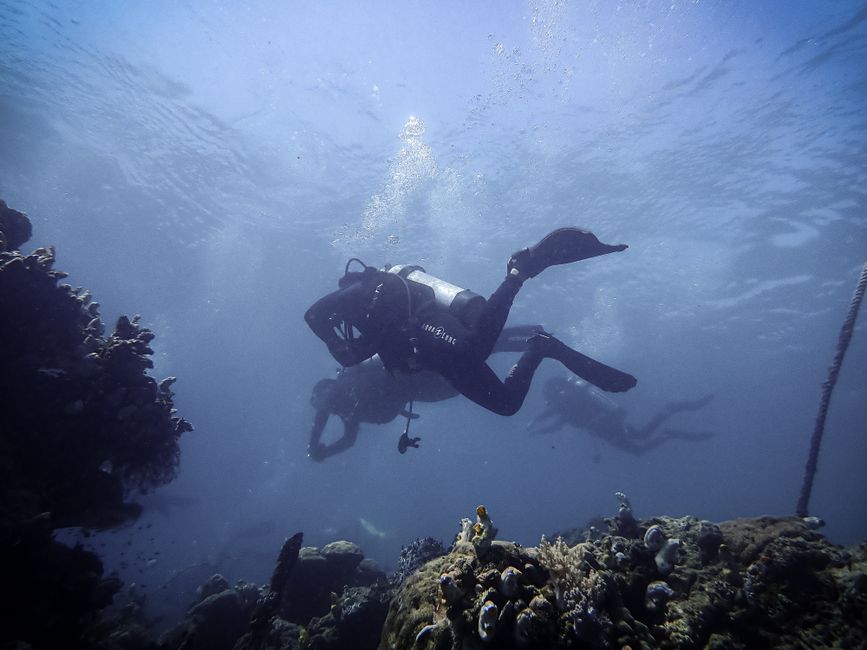
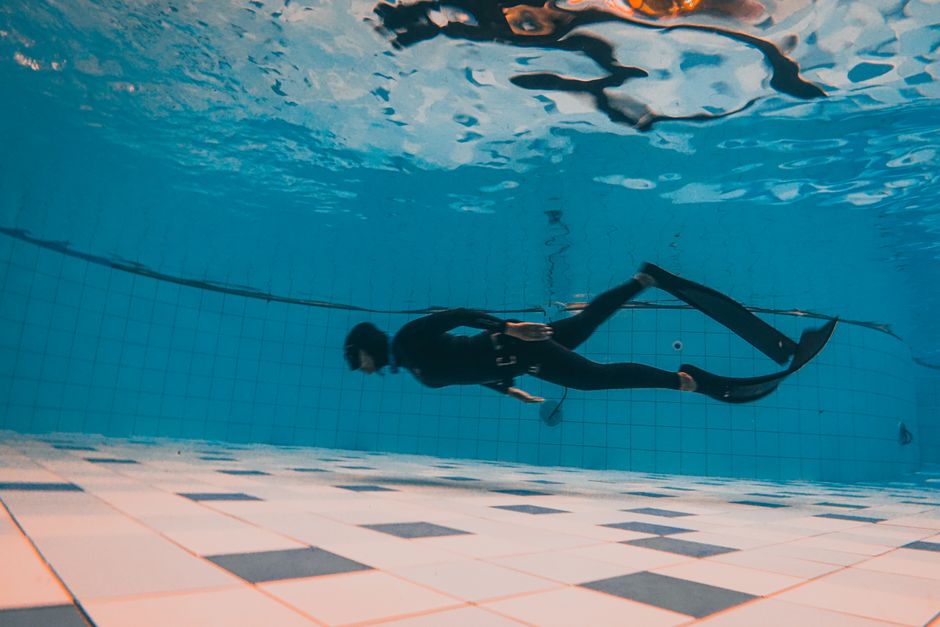
Which internal air spaces change with depth
When you descend, any volume of gas surrounded by rigid or semi‑rigid tissue will change size as pressure increases. The four compressible volumes you need to think about are the middle ear, the paranasal sinuses, the dive mask cavity and the lungs.
Two important details to keep in mind:
- The lungs are flexible. They compress passively as ambient pressure increases and you do not need to “equalize” them manually during a breath‑hold dive.
- The middle ear and sinuses sit inside bone and are essentially rigid cavities that must be opened to allow air in and therefore must be equalized if you are descending.
The mask is an external air space created by the rigid frame and flexible skirt. It must enclose the nose so you can exhale tiny amounts into it through the nostrils to keep it comfortable at depth.
Remember Boyle’s Law: at a constant temperature gas volume varies inversely with pressure. Practically this means pressure rises roughly +1 bar for every 10 meters (33 ft) of seawater, and the volume of a trapped air space will fall accordingly as you go down. Equalizing is how you restore that lost gas volume so tissues and eardrums are not stretched or damaged.
When and how often to equalize
Equalization is a descent skill. You only need to actively equalize while going down; during ascent internal gas expands and usually vents naturally. Make a habit of equalizing early and often—before you feel discomfort.
- Equalize at very short intervals: most divers equalize about every 1 m (or every 3 ft) of depth, and some do it even more frequently as they learn the rhythm.
- Start early: pre‑equalize at the surface by performing a few easy equalizations to loosen soft tissues and remind your Eustachian tubes to open.
- Equalize before changing body orientation (for example, before going head‑first or inverted) and before any anticipated rapid depth change.
- If equalization becomes progressively harder, stop your descent immediately and correct the issue. Never force an equalization—forcing can cause injury.
Primary equalization techniques — Frenzel and Valsalva
There are several techniques you can use to equalize; the two most common are the Frenzel maneuver and the Valsalva. Each has its place.
Frenzel (preferred for most freedivers)
The Frenzel is efficient, gentle and works in any orientation. The basic sequence:
- Close the glottis so air from the lungs cannot escape.
- Pinch your nostrils closed (or use the mask skirt if practicing mask equalization).
- Raise the back of the tongue and use it like a small piston to compress the air in the mouth/nasal cavity, directing that pressure into the Eustachian tubes and middle ear.
Why freedivers prefer Frenzel:
- It works inverted (head‑first) because it does not rely on pushing lung air with the diaphragm.
- It uses only the small pocket of air in the mouth and throat, so it’s economical of air and energy.
- It’s gentle and controllable, allowing small, repeatable equalizations at depth.
- It can hold pressure longer, giving the tube time to open if it is slow to respond.
Valsalva (simpler, useful near the surface)
Valsalva is straightforward: pinch the nose and gently push air from the lungs into the nasal cavity by contracting the diaphragm and chest. It’s easy to learn and often works well for shallow or early descents, but it becomes less effective as depth increases and is harder to use when inverted. Use it as an introductory tool, then transition to Frenzel for deeper or more controlled diving.
Other techniques you can use when one method stalls include the Toynbee (swallow with the nose pinched) and the Lowry (a Valsalva‑type push combined with throat movements). These are useful troubleshooting tools but are best practiced on the surface before taking them underwater.
Mask equalization — simple, frequent, controlled
Mask equalization is separate from ear equalization and is done by blowing a small controlled puff of air through the nose into the mask.
- Use very small, controlled exhalations through the nose as you descend; this balances internal mask pressure without wasting air.
- Low‑volume masks require less air and are easier to equalize; the mask must enclose the nose to allow effective equalization.
- Avoid large exhalations that create leaks or waste your reserve air. You can throttle the flow by slightly pinching the nostrils so only a trickle passes into the mask.
- If you feel mask squeeze, stop descending, hold a fixed point or the line, and add tiny puffs until the squeeze disappears. If needed, break the seal briefly or allow a controlled small amount of water in to let trapped air escape, then reestablish your equalization routine.
Common problems, causes and immediate responses
Most pressure‑related injuries are preventable and tend to come from missed or infrequent equalizations, rapid descents, or diving while congested.
- Ear squeeze: usually from missed/infrequent equalizations or congestion. Immediate response: stop descent and ascend slowly until pressure eases; try gentle Frenzel attempts. Do not force. If pain or hearing changes persist, end the session and seek medical advice.
- Sinus squeeze: occurs when sinus drainage is blocked (illness or allergy). If you feel sharp, localized pain (forehead, cheek, tooth), stop diving and surface. Persistent pain requires medical evaluation—do not continue diving.
- Hood or mask squeeze: trapped air in equipment can create pressure against soft tissues. Stop descending, break the seal or allow water into the trapped space so air can escape, then reconfigure the equipment if necessary.
- Reverse block on ascent: if trapped internal pressure can’t vent, slow your ascent (use a line), try jaw and neck movements, and rest before diving again. If symptoms like vertigo, persistent hearing loss, or bleeding occur, seek immediate medical attention.
Practice drills, pre‑dive checks and when to get professional help
Equalization is a motor skill. Practice builds speed and reflex so you equalize before pressure causes discomfort.
Dry drills
- Practice Frenzel on land: pinch your nose, close the glottis and push the back of the tongue to create a small pressure change. You should feel or hear a soft “click” or a slight pressure in the ears.
- Repeat gently until the action feels smooth and you can hold the pressure without using your diaphragm.
In‑water routine and pre‑dive checks
- Pre‑equalize at the surface several times.
- Keep equalizations frequent and shallow early in the descent; err on the side of too often.
- Check that your mask encloses the nose, that hoods or seals are not trapping air, and that you are well hydrated and free of congestion.
When to get professional help
Do not dive if you are congested, have recently had ear or sinus injury, or if you experience significant pain while equalizing. Decongestants are not a reliable fix for diving and can wear off mid‑session, so they should not be relied upon as a “go‑ahead” to dive.
If you experience persistent pain, hearing loss, vertigo, severe imbalance or any bleeding after a dive, stop diving immediately and seek medical evaluation. For hands‑on guidance, supervised drills and personalised coaching, consider enrolling in guided instruction through manifreediver.ir courses—practical supervised practice is the safest way to build confidence and competence with equalizing air spaces.