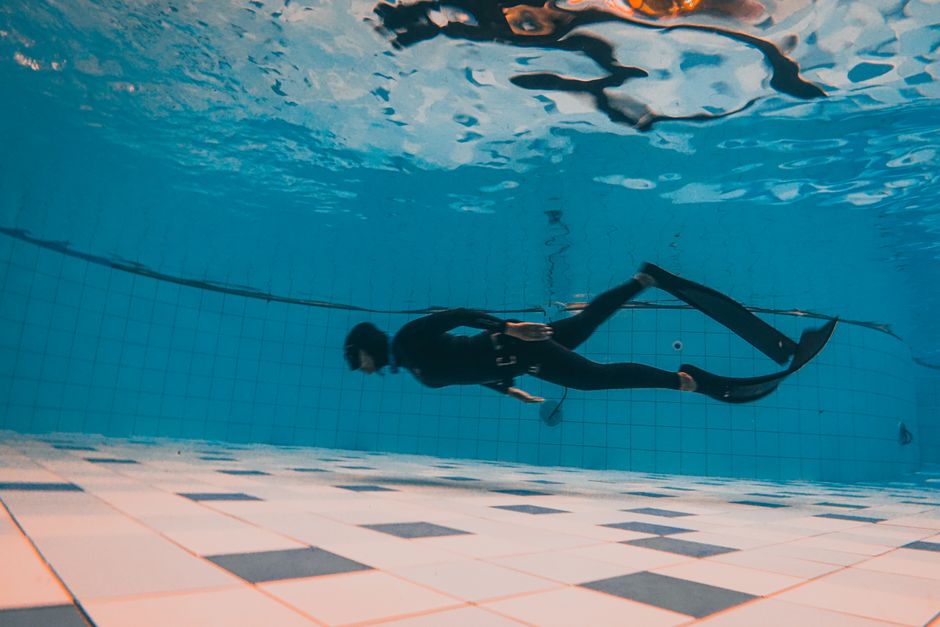
Dynamic apnea is the most accessible way to train breath-hold skills: you stay shallow, you move, and you measure distance. Below I’ll walk you through what it is, the physiology you need to respect, practical safety and buddying, technique for different fin styles, gear and weighting considerations, progressive drills, common mistakes and simple fixes, and logical next steps for your training. Read slowly, practice patiently, and always prioritize safe, conservative progression.
What is dynamic apnea?
Dynamic apnea is a horizontal breath-hold swim performed on a single breath to cover the maximum distance. Unlike static apnea (holding still) or depth disciplines (descending along a line), dynamic apnea is about efficient movement through the water: minimizing drag, maintaining a relaxed state, and executing economical kicks and turns.
There are three main sub-disciplines you’ll encounter:
- Bi-fins — one fin on each foot, alternating kick. This is the most common and beginner-friendly entry point. It builds symmetrical leg strength and clear movement patterns.
- Monofin — both feet in a single blade; propulsion is produced by an undulating, dolphin-style drive. Monofin is faster and more efficient when used correctly but needs flexibility and a refined rhythm.
- No-fins — no fins at all; propulsion from coordinated undulation and arm position. This is the most technical of the three and excellent for body awareness and economy.
Core physiology every dynamic diver must know
Understanding what your body is telling you makes the difference between training effectively and courting danger. The urge to breathe is primarily driven by rising carbon dioxide (CO2), not by low oxygen (O2). As CO2 accumulates you feel diaphragm contractions, a warm chest sensation, and sometimes an urge to swallow. These sensations are normal warnings — they exist to prevent you from pushing into dangerously low oxygen levels.
The mammalian dive reflex — a suite of responses including bradycardia (slowed heart rate) and peripheral vasoconstriction — helps conserve oxygen while you’re submerged, but it does not remove the risk of blackout. In other words, those reflexes buy you time; they are not a safety guarantee.
Two practical consequences:
- Relaxation matters. Tension and inefficient movement raise metabolic rate and CO2 production. A calm, controlled start and an economy-focused swim delay contractions and extend usable distance.
- Technique saves oxygen. Streamlining, smooth kicks, and efficient turns reduce muscular oxygen consumption. Training should prioritize technique before chasing raw distance.
Safe training environment and buddying
Pools and confined open-water sites are preferred training environments because they limit variables: predictable depth for safe shallow holds, a straight lane for turns, and easy retrieval at the surface. Always practice in a setting where both the performing diver and the buddy can maintain eye contact and a clear path.
Safety essentials:
- Never train alone. An attentive, in-water buddy must be present and able to match your pace and assist at the surface. The buddy swims alongside or slightly ahead and understands rescue basics.
- No hyperventilation before attempts. Hyperventilation lowers CO2 and suppresses the natural warning system, increasing the risk of shallow-water blackout. Work with slow, controlled breathing.
- Surface communication and conservative progressions. Agree on simple signals for “OK”, “need help”, and “stop”. Increase distance and intensity slowly; a conservative program reduces risk and builds reliable skills.
For broad dive-safety guidance consult recognized organizations such as Divers Alert Network (DAN). If you experience unusual symptoms — loss of consciousness, prolonged confusion, severe ear pain, or persistent breathlessness — see a doctor experienced in dive medicine.
Technique: body position, finning and turns
At the heart of dynamic apnea is a single goal: move as far as possible for the least energy. That comes from streamlining, timing, and controlled propulsion.
Body position
Keep a neutral head position (eyes looking slightly down), a long straight line from hips to ankles, and toes pointed. Avoid lifting the head to breathe or looking forward — that creates drag. Think of your torso and legs as a single, stiff shaft that the water must slide past.
Bi-fin technique
Bi-fins use alternating, ankle-driven kicks. Emphasize:
- Flexible ankles and pointed toes — power comes from long, smooth strokes rather than frantic splashes.
- Modest amplitude and slightly higher cadence — big, slow kicks fatigue the quads; a controlled rhythm keeps momentum with lower oxygen cost.
- Minimal knee bend — hinge predominantly at the hips.
Monofin technique
Monofin uses an undulating motion that starts at the chest, flows through the hips, and finishes at the toes. Key points:
- Generate power with an undulation chain rather than isolated leg kicks.
- Keep the core engaged and shoulders stable; avoid excessive head motion.
- Practice rhythm drills on short lengths before attempting long distances.
No-fins technique
No-fins relies on an efficient body wave, plus an extended arm streamline. Work on:
- Controlled dolphin-like undulation from the chest through the pelvis and legs.
- Lengthening the glide phase — use a powerful initial undulation then settle into a long streamline recovery.
Turns and push-offs
Turns and push-offs are energy-intensive but unavoidable. Practice tight, hydrodynamic turns and strong, streamlined push-offs. A good turn minimizes rotation and preserves forward velocity; a powerful push-off re-establishes speed so you can glide without excessive kicking. In pool dynamics, a clean turn and streamline often save more oxygen than an extra kick down the lane.
Equipment and weighting for horizontal freediving
The right gear reduces drag, improves comfort and helps you maintain horizontal trim.
Fins: select blades matched to your strength and ankle flexibility. Longer and stiffer blades produce more thrust per stroke but require conditioning and proper technique. If you tire or your cadence breaks down, switch to a more forgiving blade.
Wetsuit and weighting: dynamic apnea typically requires more weight than vertical constant-weight diving because you want a neutral horizontal trim while lungs are full. Do a buoyancy check — glide for about ten seconds without kicking and verify you neither float up nor sink — and adjust weight distribution until you’re level. A small neck weight can improve trim by moving your center of gravity forward and keeping legs from sinking.
Accessories that help:
- Low-volume mask or contact lenses for a clean field of view and less air to equalize.
- Thin socks or gloves for comfort; beware that thicker socks change fin fit.
- Smooth-skin outer layers or a smooth-skin wetsuit to reduce drag in cooler water.
Remember: start with a conservative weight and refine it through repeated buoyancy checks and short test swims. Even well-used rules of thumb are only starting points — personal anatomy, wetsuit construction, and water salinity all change the result.
Progressive training drills to build distance
Training should be structured around technique first, then controlled increases in distance and intensity. Keep a logbook — small, consistent gains add up.
Suggested progression (examples to adapt to your level):
- Technique-first repeats: Short swims (20–30 m) focusing on perfect streamline, controlled cadence, and relaxed breathing between attempts. Do many repetitions; quality over distance.
- Skill blocks: Separately practice turns, push-offs, and monofin or no-fins coordination in focused sets. For example, 10 focused turns from a push-off, emphasizing tight tuck and instant streamline.
- Interval sessions: Repeated efforts with defined surface recovery teach efficient recovery and raise CO2 tolerance. Keep rests long enough that form stays clean — if form degrades, stop the set.
- Progressive distance: Add small increments to your maximum comfortable distance (for example, 5–10% increases), always within a margin that preserves relaxed form and controlled surface recovery.
Throughout, emphasize relaxed, controlled breathing patterns and never use hyperventilation to push limits. Track sensations, time between attempts, and distance in your logbook so you can see real improvement without chasing risky personal records.
Common errors and how to fix them
Most inefficiencies are simple to diagnose and fix with focused practice.
Overkicking and rushed turns — wasted oxygen:
- Fix: reduce kick amplitude, raise cadence slightly, and practice long glides after each push-off. Drill short sets where the only allowed error is a visible break in streamline; stop and correct the form.
Bad trim (legs sinking or head too high) — increased drag:
- Fix: run buoyancy checks and redistribute weight. A small neck weight can lift the legs; moving weight slightly forward or aft on your belt often restores balance. Combine weight adjustments with posture drills on short swims.
Relying on hyperventilation or skipping surface recovery — increases blackout risk:
- Fix: practice controlled breathing routines and respect longer intervals between maximal efforts. If you experience unusual dizziness, prolonged disorientation, or fainting, seek medical assessment from a physician experienced in dive medicine.
Where to take your training next
Once your pool technique and safety practices are solid, transfer skills to calm open water. The environmental factors — small currents, visibility, temperature changes — are useful stimuli to develop awareness, but keep early sessions short and conservative.
If you intend to specialize, do so deliberately:
- Build a strong bi-fin foundation first; the movement economy and body awareness you develop there make monofin and no-fins training safer and more productive.
- Dedicate sessions to a single specialty: one day for monofin technique, one day for no-fins coordination, and other days for mixed-distance bi-fin work.
- Seek supervised feedback. Local instructors, pool and open-water programs (including those listed on manifreediver.ir), can provide structured progressions and precise corrections that are hard to self-diagnose.
Train patiently. Dynamic apnea rewards small, consistent improvements in relaxation, streamline, kick economy and surface recovery. Keep safety central: train with an attentive buddy, respect the body’s warnings, and consult professionals when symptoms suggest more than routine training fatigue.


