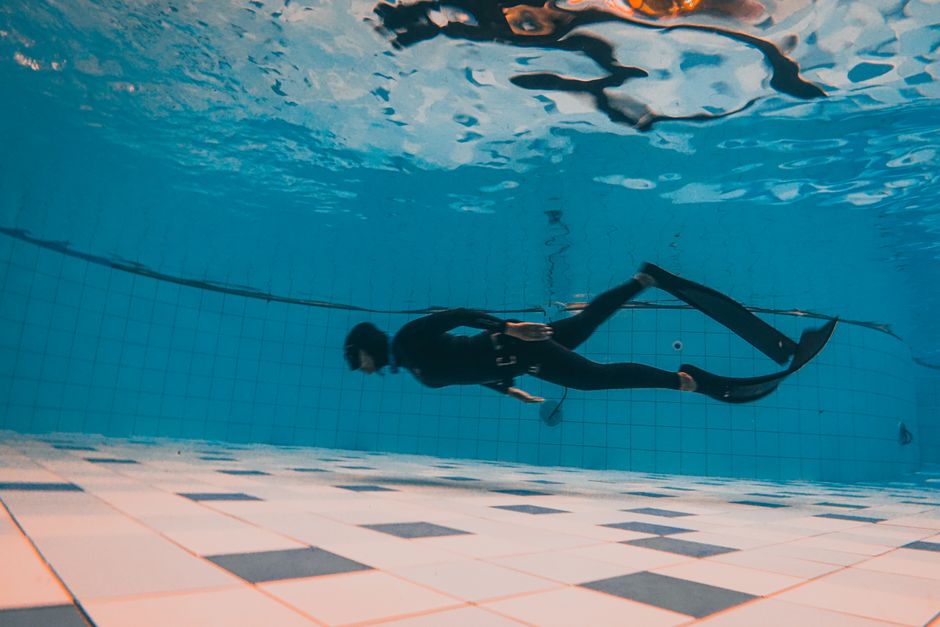
What is hypoxia and why freedivers encounter it
Hypoxia means the tissues of the body are not getting enough oxygen. It exists on a spectrum: from mild, reversible shortfalls that you might tolerate during vigorous exercise, to severe drops that impair brain function and can lead to loss of consciousness. For freedivers, hypoxia is an expected part of breath‑holding. Every time you stop breathing your body continues to consume oxygen, so arterial oxygen and tissue delivery fall over time.
Most breath‑holds begin with plenty of oxygen reserve, and the body gives multiple warning signals before oxygen reaches dangerous levels. The difficulty comes when those warnings are blunted or missed. When oxygen falls below the threshold that the brain can tolerate, protective mechanisms fail and unconsciousness can occur. Understanding where the normal, manageable level of hypoxia ends and the critical level begins is the foundation of safe freediving.
Key point: mild hypoxia during breath‑holds is normal; dangerous hypoxia is when brain oxygenation drops enough to impair conscious control.
How oxygen and carbon dioxide drive the body’s alerts
Two gases—oxygen (O2) and carbon dioxide (CO2)—play very different roles in how the body regulates breathing and signals danger.
The familiar “urge to breathe” that you feel during a breath‑hold is driven primarily by rising CO2, not by falling oxygen. As CO2 accumulates in the blood it changes local chemistry and stimulates chemoreceptors that alarm the brain: breathe now. That alarm usually arrives well before oxygen runs out, which is a useful safety buffer.
At the same time, oxygen delivery from blood to tissues depends on chemistry and blood flow. The Bohr effect describes how changes in CO2 and pH alter hemoglobin’s affinity for oxygen: when CO2 and acidity rise, hemoglobin releases oxygen more readily to tissues; when CO2 is very low and blood is alkalotic, hemoglobin holds on to oxygen more tightly. This means that lowering CO2 by heavy breathing prior to a dive does not materially raise oxygen content, but it does make it harder for tissues to extract oxygen.
Another important consequence of low CO2 is cerebral vasoconstriction. Carbon dioxide is a potent regulator of cerebral blood vessel diameter: high CO2 dilates vessels and increases blood flow to the brain; low CO2 causes constriction and reduces cerebral blood flow. That reduction can, paradoxically, reduce oxygen delivery to the brain even when blood oxygen appears adequate. In practice, deliberate or accidental over‑breathing that lowers CO2 can delay the urge to breathe, reduce cerebral blood flow, and mask the warning signs that would normally protect you from blackout.
The progression: normal sensations → loss of motor control → blackout
Freediving hypoxia follows a recognisable progression. Learning the sensations and their order helps you and your buddy identify trouble early.
Normal sensations
As a breath‑hold lengthens you’ll commonly notice:
- an increasing sensation of swallowing or throat tightness;
- a warm or heavy feeling in the chest;
- irregular contractions of the diaphragm (diaphragmatic twitches);
- a narrowing of attention—sometimes called tunnel vision.
These are the body’s urge‑to‑breathe signals. They are uncomfortable but normally reversible with ascent and breathing.
Loss of motor control (LMC)
If breath‑holding continues past the point where the brain can fully coordinate movement, involuntary muscle contractions and coordination failures can appear. This is commonly called loss of motor control, or LMC. It most often happens at the surface during the recovery, although it can occur near depth in some circumstances.
Signs of LMC include tremors, head nodding, difficulty standing or walking, slurred or impaired speech, eye‑rolling, and the perceptual narrowing described above. Importantly, LMC commonly resolves quickly with breathing and re‑oxygenation. Nevertheless, LMC is a red flag: if it is allowed to continue, the next stage—blackout—may follow.
Blackout
Blackout is a transient loss of consciousness caused by critically low oxygen reaching the brain. On land, a blackout may look like someone simply fainting while holding their breath; underwater it is far more dangerous because the airway may be submerged. Underwater blackouts are especially perilous because the diver cannot clear an airway or summon help.
Before a blackout there will usually be signs you can observe: erratic finning, panicked or uncontrolled behaviour, emptying of air from the mouth, and the LMC signs above. LMC is effectively the last stage you want to see; blackout follows soon if the diver is not assisted promptly.
Common triggers and risk factors to watch for
Some circumstances make freediving hypoxia more likely or more dangerous:
- Intentional or accidental hyperventilation before a breath‑hold. Over‑breathing knocks down CO2, delays the urge to breathe, causes cerebral vasoconstriction, and can hide the body’s warning signals.
- High physical exertion during a dive. Strong finning or heavy work raises oxygen consumption and speeds depletion.
- Rapid ascents and pressure changes. As ambient pressure decreases during ascent the partial pressure of oxygen in the lungs and blood falls; a diver who was conscious at depth may blackout before or as they reach the surface.
- Repeated deep or long dives with insufficient surface recovery. Cumulative oxygen debt reduces tolerance.
- Cold water, fatigue, or poor conditioning. These increase metabolic stress and reduce tolerance to hypoxia.
- Medications, recent illness, alcohol, or dehydration. These can reduce your margin of safety; always honestly assess fitness before diving.
Be aware that individual tolerance varies day to day; what felt fine yesterday may feel different today. If you feel unusually unwell, light‑headed, or confused before diving, stop and reassess.
Immediate actions: what to do at the surface and during a rescue
Quick, calm, and practiced responses save lives. Review these actions with your buddy before every session so responses become automatic.
Loss of motor control (LMC)
- Keep the diver upright or head supported so their face is clear of the water.
- Prevent further exertion; remove any risk of falling or immersion.
- Encourage calm recovery breathing—slow, full breaths without hyperventilating—until normal control and awareness return.
- Maintain close supervision and do not allow the diver to resume breath‑holding for the rest of the day.
Even if LMC resolves quickly, it is a mandatory signal to rest and stop diving that day.
Unconscious diver
If a diver is found unconscious in the water, act immediately:
- Bring the diver to the surface without delay, supporting the airway so the face clears the water.
- Extend the head‑tilt/chin‑lift to open the airway and look, listen, and feel for breathing.
- If the diver is breathing, maintain a clear airway, place them in a recovery position, and monitor continuously until fully alert and medically cleared.
- If not breathing, begin ventilations (rescue breaths) and standard CPR as indicated while someone calls for emergency medical services. Continue until professional help takes over.
Never leave a recovered or unconscious diver alone. Continuous monitoring and medical evaluation are required after any loss of consciousness.
For authoritative guidance on dive safety and post‑incident management consult recognized safety organizations such as Divers Alert Network (DAN).
Prevention: safe practices, warm‑ups and training habits
Prevention combines technique, discipline, and sensible habits.
Avoid hyperventilation. Use relaxed, controlled breath‑ups. The goal of a breath‑up is to calm the body and heart rate, not to chase the longest possible time. If you feel tingling, light‑headedness, or other symptoms of over‑breathing, stop and return to normal breathing before starting any breath‑hold.
Warm up progressively. The mammalian dive reflex and your tolerance to CO2 improve with a careful warm‑up series of shorter breath‑holds and rest intervals. Gradual progression—longer breath‑holds and deeper dives over weeks and months—builds physiological adaptations more safely than trying to make large jumps.
Train honestly and rest adequately. Avoid repeated maximal attempts in a single session. Fatigue accumulates and reduces your safety margin; allow full recovery between dive sets and end the session while still feeling comfortable.
Always dive with a competent buddy and agreed surface protocol. Your buddy should be watching you whenever you are in the water and able to intervene quickly. Practice rescue scenarios in calm conditions so your responses are smooth and unhurried.
Seek supervised instruction. Hands‑on coaching accelerates learning and reduces unsafe experimentation. For on‑site instruction see manifreediver.ir.
After an event: recovery, medical follow‑up and return‑to‑dive rules
Any episode of loss of motor control or blackout is a serious event and must be treated cautiously.
Immediate post‑event care: stop diving for the remainder of the day. Continue to supervise the diver until they are fully alert, coherent, and physiologically stable. Basic rest and oxygen (if available and trained to provide it) can be helpful while awaiting medical assessment.
Medical follow‑up: if symptoms persist—confusion, prolonged headache, visual changes, memory problems, weakness, or other neurological signs—seek professional medical evaluation promptly. See a doctor experienced in dive medicine if symptoms persist or if you have any doubt about recovery. Diving after a loss of consciousness should be cleared by a medical professional; timelines for return depend on the underlying cause and the clinician’s advice.
Even if recovery appears complete, document the event and review your practices. Identify triggers (for example, unintended hyperventilation, excessive exertion, or insufficient rest) and change habits accordingly. Conservative recovery and documented medical clearance are the safest routes back to the water.
When practiced with respect for the body’s limits and with reliable partners, freediving is a rewarding and controllable activity. Understanding freediving hypoxia—how it develops, how it feels, and how to prevent and respond to it—lets you keep the practice safe for yourself and those you dive with.